Issue Briefs
Demographic decline and immigration policies in the European Union
By Massimiliano Cintura, GPI Fellow
April 10,2026
According to the latest Eurostat data, the population of the European Union on January 1, 2025, was estimated at 450.6 million people. Children between the age of 0 and 14 represented 14.4% of the total population, while people of working age (15–64) made up 63.6%. Individuals aged 65 and over accounted for 22.0% of the population. This represents an increase of 0.4 percentage points compared with the previous year and a rise of 2.9 percentage points compared with ten years earlier. In 2024, by comparison, children accounted for 14.6% of the population, working-age individuals for 63.8%, and older people for 21.6%.
Fewer children
Looking at individual EU countries, the largest proportions of children in 2025 were found in Ireland (18.5%), Sweden (16.8%), and France (16.6%). In contrast, the smallest shares were recorded in Italy (11.9%), Malta (12.1%), and Portugal (12.6%). Compared with 2024, all other EU countries experienced a decline in 2025 (only Luxembourg and Germany maintained the same proportion of children in their populations). Concerning the proportion of older people, Italy (24.7%), Portugal (24.3%), and Bulgaria (24.0%) showed the highest shares, whereas Luxembourg (15.2%), Ireland (15.7%), and Cyprus (18.3%) had the lowest. Between 2024 and 2025, the share of people aged 65 and over increased in 26 EU countries, while it remained unchanged in Malta.
Over the last decade (2015–2025), the share of people aged 65 and above in the EU population rose by 2.9 percentage points overall. The most significant increases were recorded in Poland (5.6 percentage points), Slovakia (4.8), and Croatia (4.3). On the other hand, the smallest increases occurred in Malta (0.4), Luxembourg (1.0), and Sweden (1.2).
Median age going up, more immigrants
Between 2015 and 2025, the EU’s median age increased by 2.1 years, rising from 42.8 years in 2015 to 44.7 years in 2024 and 44.9 years in 2025. Most EU countries recorded an increase during this period, with the largest growth occurring in Slovakia and Cyprus (both +4 years). However, Germany and Malta experienced slight decreases. In Germany the median age declined from 45.9 years in 2015 to 45.5 years in 2025, and in Malta from 40.4 to 40.0 years. Between 2024 and 2025, the median age rose in 25 EU countries, while it remained unchanged in Germany and Denmark.
The number of non-EU citizens living in the European Union increased by 2.3 million at the beginning of 2024, with Ukrainian, Turkish, and Moroccan citizens representing the three largest groups.
Approximately 44.7 million people born outside the European Union were living in a Member State at the start of 2024. That means 9.9% of the population. It marks an increase of 2.3 million people compared to the previous year.
Persistent low fertility and its demographic consequences
The total fertility rate in the EU has been below the replacement level of 2.1 live births per woman since the mid-1970s, according to the World Bank. When fertility declines and remains persistently at such low levels, births decrease not only because of the low average number of children per woman, but also because each new generation includes fewer potential parents (that is, women of reproductive age). This leads to increasingly pronounced imbalances between the elderly population (which grows, thanks to longer life expectancy) and the population entering prime working age. At a certain point, the gap becomes so wide that even larger numbers of new immigrants are unable to halt the decline.
Europe’s 2050 future
By 2050, 22 out of 27 Member States will see a decline in their working-age population, while the share of people aged 85 and over will double, putting pressure on healthcare and pension systems. The decline will be more pronounced in Eastern and Southern European countries, where deaths outnumber births and there is a limited capacity to attract immigrants. Thus, while the more developed economies of Northern and Western Europe will be able to mitigate the problem thanks to higher levels of immigration, the South and East risk falling into a vicious cycle of aging and depopulation.
Two types of migration
There is an intra-European migration, with people moving from one European country to another, effectively weakening their country of origin while strengthening the destination country. From this perspective, it is not migration itself that ensures demographic recovery, but rather the fact that immigrant families find in the host country a public welfare system that makes it easier for them to build a family and have children.
There is also non-European immigration. In this case, it is true that families coming from Africa and South America tend to have higher fertility rates in the short term. However, it should be noted that, once integrated into the destination country, immigrants tend to have fewer children.
Approaches to immigrant integration in Europe
There are three types of political approaches to integration. The assimilationist approach places the responsibility on immigrants themselves to adapt to the traditions, customs, and practices of the host societies. The multicultural approach, on the other hand, calls on host societies to be more tolerant, supportive, and capable of encouraging the recognition of cultural differences. Since 2004, the European Union has supported a third approach, which views integration as a middle ground between the first two.
European states do not have coordinated policies. Both economic and cultural integration are deeply influenced by institutions and ideas that have little to do with immigration, and which were certainly not designed as public policies for integration. Economic integration is mainly shaped by a country’s level of economic efficiency and its welfare system. This has an impact in the participation of immigrants in unregulated economic activities and businesses. This in turn has an impact on the level of social protection immigrants can access compared to native workers, the extent of real opportunities for self-employment and entrepreneurship, and efforts to combat discrimination in the labor market. Therefore, the integration of immigrants depends on factors that are far more structural and systemic than new policies explicitly aimed at immigrant integration.
Difficult debates on immigrants within the European Union
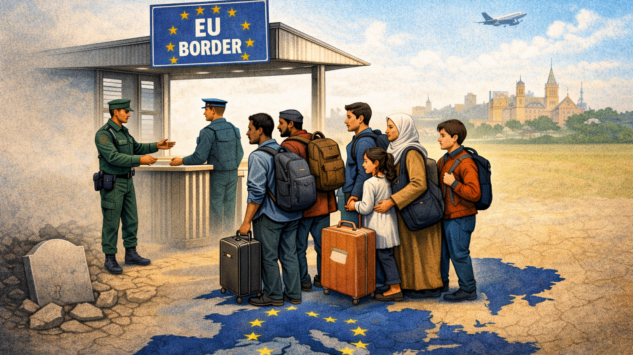
Migration is a hot topic in the European Union, with leaders of the 27 Member States often debating the creation of a common policy on migration and asylum. However, closing the door to migrants would put most EU countries under greater economic pressure. As the EU population ages its workforce will shrink, while the costs of pensions and elderly care will increase. However, immigration, while a resource, cannot be the only response to demographic decline. The integration of newcomers is a complex challenge and, if not properly managed, it can lead to social tensions and imbalances in the labor market. There is a need for policies that go beyond the steps required to immigrate. There must be programs for labor and social inclusion, investments in education and training for immigrants, and measures to reduce concentration in large cities, which risks leaving rural areas increasingly deserted.
Policies must be tailored to the needs of each country, but there is also a need for an overarching plan at the EU level to harmonize fiscal incentives for families, improve regional infrastructure, and make the management of internal and external mobility more effective.
Immigration alone is not the answer
Immigration represents a strategic resource to offset the decline in the European native born working-age population, but simply opening borders is not enough. It is necessary to attract talent through targeted policies that promote the inclusion of skilled workers and their social integration.
Countries such as Canada and Australia have already adopted skills-based immigration programs, while in Europe the entry of foreign workers often faces cultural and bureaucratic resistance. If properly managed, immigration could cover up to 30% of labor demand in some countries by 2050. The real challenge will be to redefine the very concept of work, adapting it to a society in which older generations will be in charge for a longer period of time, while requiring more care.
Legal Disclaimer
The Global Policy Institute (GPI) publishes this content on an “as-is” basis, without any express or implied warranties of any kind. GPI explicitly disclaims any responsibility or liability for the accuracy, completeness, legality, or reliability of the information, images, videos, or sources referenced in this article. The views expressed are those of the author and do not necessarily reflect the opinions or positions of GPI. Any concerns, copyright issues, or complaints regarding this content should be directed to the author.
 |
Massimiliano Cintura is a Global Policy Institute fellow. He received his MA in International Studies in 2025, from the University of Turin, Italy, with a dissertation on Frontex (the European Border and Coast Guard Agency). Prior to that he earned a BA in International Science, Development and Cooperation in 2023, with a dissertation on Eurojust (the European Union Agency for Criminal Justice Cooperation), also from the University of Turin. His areas of expertise and research focus include: International Relations, Global Affairs, Migration, Defense and Security issues. |