Issue Briefs
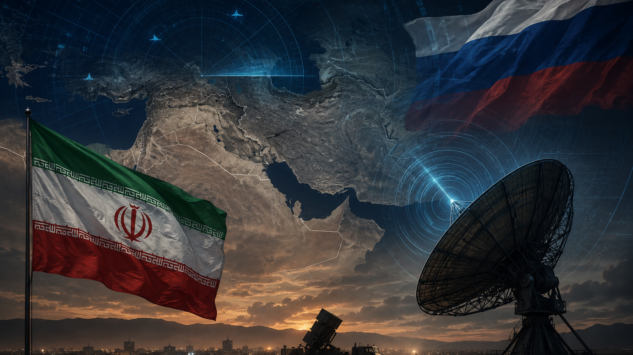
Iran on Notice, And Why Russia’s Electronic Intel Won’t Make a Tactical Difference (From FOX Business)
By Rebecca L. Grant, Ph.D., Vice President, Lexington Institute.
August 6,2026
Fox Business Network anchors Jackie DeAngelis and Lou Basenese kicked off a discussion of American forces in U.S. Central Command, Russia’s attempts to help Iran with electronic intelligence, and why protecting critical infrastructure like data centers is an emerging lesson of the Iran war. Highlights below, and show clip here.
Jackie DeAngelis: A touch of déjà vu today, with President Trump putting Iran on notice one last time.
President Donald J. Trump (SOT): This is a last chance for them to sign good document. I want to give them every last chance before decapitation. But hopefully they’ll come to their senses. They called me and said, “please don’t attack, we’ll make a deal.” That’s the real truth, and everyone knows it. I’m under no time constraints, you know, I don’t happen to be running.
Lou Basenese: This comes after a tense weekend, with President Trump calling off major military strikes against the terror regime to give peace talks a chance. America’s Gulf allies joined that diplomatic push to keep negotiations alive. But Iran is denying the conversation ever happened.
Jackie DeAngelis: The President is blasting their quote “unbelievably duplicitous” leadership on Truth Social, saying in part, “whether Iran wants to admit it or not we are in fact talking of a solution to a problem that they have caused for decades.”
Lou Basenese: I’ve got a question for you. As we look across the world, we see oil prices bouncing everywhere. We see statements that conflict with each other, which is to be expected during times of war. What’s the real tell for Americans that things have changed, and we’re getting near an agreement and an end to this conflict?
Rebecca Grant: The number one thing to pay attention to is the presence of forces in U.S. Central Command. We still have 50,000 forces there, capable of any array of action; keeping that blockade in place and doing the big strike if needed….I don’t want to read another Iranian social media post, they’re ridiculous. Big picture, remember President Trump really wants to work with the regional partners, because he has his eyes on the Abraham Accords as the end game.
Jackie DeAngelis: I’m thinking about the call from the regional partners to hold off because they’ve got to deal with the collateral damage, if the United States were to attack. He’s a realist, and negotiating with these people who come out on social media and then say the conversations never happened, and they gaslight the United States, makes it very difficult to come to terms in an actual agreement. I read an article in the New York Post citing sources on the ground saying that the anti-government movement was gaining steam. There has been more organization, since January, when so many people were brutally crushed by the regime. Dr. Grant, do you think that part of why the President is waiting this out, is to see if the people have the ability to rise up and overthrow the government?
Rebecca Grant: Oh, I sure hope that that is the case. And I will tell you, what we’ve done to weaken the IRGC is absolutely vital to that even having a chance. But remember, Trump can play this any way he wants to, because we have so much air and sea dominance there: the two aircraft carriers, the USS Tripoli, and our Space Force over top of all this. He is able to dial up and dial down the military pressure because of what our service members are providing.
Jackie DeAngelis: Really it’s just remarkable, I mean he’s got the stock market on his side, he has oil prices in a range which is pretty good under the circumstances, the bond yields aren’t great, but he has time to wait.
Lou Basenese: He does, and I think he’s playing it right, but it’s just a matter of, I think his patience running thin on the world and with Americans and that’s why I asked before, is there some definitive tell, and I think you’re saying we’ve got to wait for it we’ll know when it’s here.
Rebecca Grant: Yes, we need to be patient at this point. Look, this has got huge geopolitical consequences. We know from our Chairman of the Joint Chiefs, General Dan Caine, that Russia is active in helping out Iran. The oil that is getting out, and do you know who the big buyer is? It’s China, of course. So, this is about control of the Strait, taking away the dangers of Iran and ending up with a Middle East that’s aligned around the Abraham Accords. America needs this to happen, and we’ve got to have the patience to see it through.
Jackie DeAngelis: Can I ask you about Russia? Because you mentioned China, and we see that our two enemies might be strategically helping the Iranians. On the Russian side, sharing valuable electronic intel with Iran. On the China side, the possible supplying of drones and missiles. How does the President combat this?
Rebecca Grant: Yes, and the Russia-Iran cooperation has gotten very strong, and, of course, China is in that mix as well. So, what we know is that the Russians have upgraded some of the Iranian drones that they buy. We know Russia’s probably trying to provide tactical information. They built Iran’s air defenses, so they’re trying to provide tactical information to help Iran. The good news here is that it’s really not working. There are no Iranian aircraft that can do the electronic jamming, whereas, on our side, we’ve got electronic jammers off the carriers, on our fighters, the Compass Call, etc. We have such dominance over that. And, of course, our Space Force: it would take a long time to go into it, but they have ways of watching that electronic system as well. So we are very familiar with Russian tricks when they get into SIGINT, and we have been watching for that. But there is no question, I think Russia is trying to help out Iran. But look, we’re still the ones with freedom of action in that region. It’s not working.
Lou Basenese: Yeah, you call them Russian tricks, and before you were mentioning all the assets we have there. At what point does Russia providing targeting info or support become actual participation in the conflict that escalates on their behalf?
Rebecca Grant: Like the Chairman said, it’s “activity.” I mean, they want to stop short of calling it participation, but we know that they have this alliance; they’ve had it for quite some time. Russia builds Iran’s civil nuclear power plants, among other things, so there’s no question that Putin is happy to help out Iran a little bit. But it’s not going to make a tactical difference. Admiral Cooper’s forces really have the upper hand, and they’re incredibly aware of this. Look, even our drones have electronic warfare, so, you know, we have to dominate that electromagnetic spectrum. Russia is trying to chip away at that through Iran. It’s not going to work, but there are some good lessons there for the future, and also about the need to defend critical infrastructure. You saw those attacks on Amazon and other data centers in the Gulf region – a big lesson learned.
This article was originally published on the Lexington Institute: Iran on Notice, And Why Russia’s Electronic Intel Won’t Make a Tactical Difference (From FOX Business) | Lexington Institute.
Legal Disclaimer
The Global Policy Institute (GPI) publishes this content on an “as-is” basis, without any express or implied warranties of any kind. GPI explicitly disclaims any responsibility or liability for the accuracy, completeness, legality, or reliability of the information, images, videos, or sources referenced in this article. The views expressed are those of the author and do not necessarily reflect the opinions or positions of GPI. Any concerns, copyright issues, or complaints regarding this content should be directed to the author.