Issue Briefs
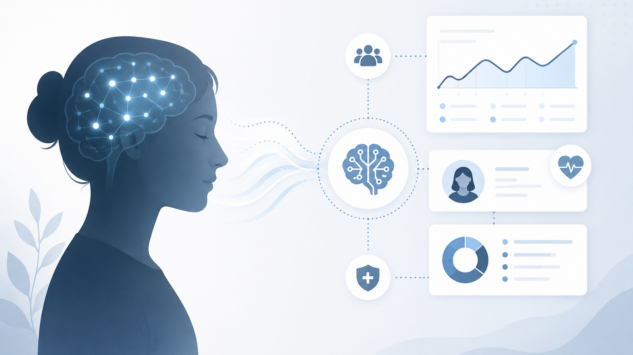
Rethinking Mental Health Care Through Predictive Analytics and AI
By Janice Tagoe
May 13,2026,
Mental health systems around the world are facing mounting pressure. Rising rates of anxiety, depression, substance use disorders, and suicide risk are stretching already overwhelmed healthcare systems. At the same time, clinician shortages, fragmented care coordination, and limited intervention capacity continue to make access to timely support difficult for many patients. For years, mental health care has largely operated reactively, with providers stepping in only after symptoms become severe enough to trigger hospitalization, crisis intervention, or emergency treatment.
That approach is beginning to change.
Advances in machine learning are opening the door to a more proactive model of care. Instead of waiting for a crisis to happen, healthcare organizations are increasingly using predictive analytics to identify patients who may be at risk long before their condition escalates. By analyzing behavioral trends, clinical histories, and healthcare utilization patterns, these systems can help care teams intervene earlier and more strategically. In some cases, researchers are finding that deterioration can be predicted months, and even up to a year, before a major psychiatric event occurs.
This shift toward predictive care has the potential to reshape how mental health systems approach triage, care coordination, and early intervention.
Moving Beyond Crisis Response
Predictive risk stratification refers to the use of machine learning and statistical modeling to identify individuals who may be at greater risk of worsening health outcomes before those outcomes occur. In mental health care, this could mean forecasting risks such as psychiatric hospitalization, suicide attempts, severe depressive episodes, medication nonadherence, or disengagement from treatment.
The rapid growth of electronic health records, wearable devices, behavioral datasets, and digital health platforms has made this kind of forecasting increasingly possible. Machine learning systems are particularly effective at detecting subtle patterns across large datasets that might otherwise go unnoticed in routine clinical care.
Researchers at institutions such as Duke University School of Medicine have explored how predictive models can identify worsening psychiatric symptoms with notable accuracy. One Duke-led initiative reported approximately 84 percent accuracy when forecasting symptom deterioration using longitudinal mental health data. These systems analyzed combinations of demographic information, prescription patterns, clinical histories, missed appointments, and behavioral indicators to identify elevated risk profiles.
Importantly, these tools are not designed to replace clinicians. Instead, they function as decision support systems that help care teams identify vulnerable patients earlier and determine when additional outreach, monitoring, or intervention may be necessary.
The Rise of Data Driven Triage
One of the biggest operational changes happening in mental healthcare is the emergence of data driven triage systems.
Healthcare organizations are recognizing that patient behavior itself can provide valuable insight into mental health deterioration. Repeated appointment cancellations, delayed prescription refills, declining engagement with digital health platforms, or sudden changes in healthcare utilization patterns may all signal worsening conditions before a formal diagnosis changes.
Research published by the National Institutes of Health and other academic institutions has shown that missed appointments often correlate with mental health instability, socioeconomic stress, and increased emergency care utilization. Machine learning systems can continuously monitor these patterns and flag patients who may need additional support in real time.
In practice, this is leading to several operational changes across healthcare systems, including:
- Automated alerts when high risk patients disengage from treatment
- Faster escalation pathways for behavioral health teams
- Targeted telehealth outreach for vulnerable individuals
- Prioritized scheduling for patients showing signs of deterioration
- Smarter resource allocation during staffing shortages
These capabilities allow healthcare providers to intervene earlier, potentially preventing psychiatric crises before emergency care becomes necessary.
Predicting Deterioration Earlier Than Ever Before
Several emerging machine learning systems are now demonstrating the ability to forecast mental health deterioration far earlier than traditional assessment approaches.
Researchers have found that long term behavioral and clinical patterns can reveal risk trajectories months in advance. Factors such as sleep disruptions, medication adherence, hospitalization history, language patterns in clinical notes, and social determinants of health can all contribute to predictive models.
Some National Institute of Mental Health supported studies have explored AI systems designed to predict suicide risk using electronic health record data. These models often outperform traditional screening tools because they are capable of analyzing thousands of variables simultaneously.
Natural language processing models are also being used to analyze clinician notes, patient communications, and therapy transcripts for subtle linguistic patterns associated with depressive relapse, psychosis risk, or suicidal ideation. Research from institutions including Harvard and Stanford Medicine suggests that small language changes may serve as early warning indicators long before more visible symptoms emerge.
The implications are significant. If healthcare providers can identify vulnerable patients six to twelve months earlier, they gain a much larger window to intervene, maintain treatment continuity, and potentially save lives.
Looking Beyond Clinical Data
Modern predictive systems are also expanding beyond traditional clinical variables. Increasingly, researchers are incorporating social determinants of health into these models, including factors such as housing instability, unemployment, transportation barriers, and financial stress.
Research consistently shows that these conditions strongly influence mental health outcomes. AI systems trained on multimodal datasets can identify how social and behavioral stressors interact with psychiatric conditions in complex ways.
Consumer generated health data is also becoming more relevant. Smartphone usage patterns, wearable device data, mobility tracking, sleep monitoring, and digital engagement metrics are all being explored as potential indicators of mental health deterioration.
According to the World Health Organization, digital technologies could significantly improve access to preventive mental healthcare, particularly in underserved communities where behavioral health resources remain limited.
The Ethical and Operational Challenges Ahead
Despite the promise of predictive mental health AI, important challenges remain.
One major concern is algorithmic bias. Models trained on incomplete or unrepresentative datasets may produce disparities across racial, socioeconomic, or geographic groups. Ensuring fairness and transparency is becoming an increasingly important issue for healthcare providers and policymakers alike.
Data privacy is another critical issue. Mental health information is among the most sensitive forms of healthcare data, and predictive systems require strong governance frameworks to ensure patient trust and regulatory compliance.
Clinician trust also matters. Healthcare professionals need to understand how predictive systems generate recommendations and risk scores. As a result, explainable AI systems that provide interpretable reasoning are becoming more important in clinical environments. Organizations such as the American Medical Association and the World Economic Forum have both emphasized the importance of responsible AI governance in healthcare, especially for high stakes behavioral health applications.
Toward a More Preventive Mental Health System
The broader significance of predictive risk stratification goes beyond technology itself. It represents a deeper shift in how mental healthcare is delivered.
For decades, many mental health systems have operated in crisis response mode. Predictive analytics introduces the possibility of a more preventive approach, one where healthcare systems identify vulnerability earlier, allocate resources more effectively, and intervene before conditions escalate into emergencies.
This transition could have far reaching implications for public health policy, hospital operations, workforce planning, and healthcare spending. Earlier intervention may help reduce repeated psychiatric hospitalization, improve continuity of care, and lessen the long term burden of untreated mental illness.
Machine learning alone will not solve the global mental health crisis. But when combined with clinicians, social workers, public health infrastructure, and evidence based care models, predictive analytics could become one of the most valuable tools in building a more proactive, responsive, and resilient mental healthcare system.
This article is a contribution to the Global Policy Institute Boosting Opportunities Societies Program – Health Care Focus
Legal Disclaimer:
The Global Policy Institute (GPI) publishes this content on an “as-is” basis, without any express or implied warranties of any kind. GPI explicitly disclaims any responsibility or liability for the accuracy, completeness, legality, or reliability of the information, images, videos, or sources referenced in this article. The views expressed are those of the author and do not necessarily reflect the opinions or positions of GPI. Any concerns, copyright issues, or complaints regarding this content should be directed to the author.
 |
Janice Tagoe is a multifaceted data analytics and technology professional with a distinguished career across various industries, including education, government, non-profits, and technology. She is a Senior Data Analyst at the Washington State University and the Board Secretary at Global Policy Institute, in Washington, D.C. |